
Table of Contents
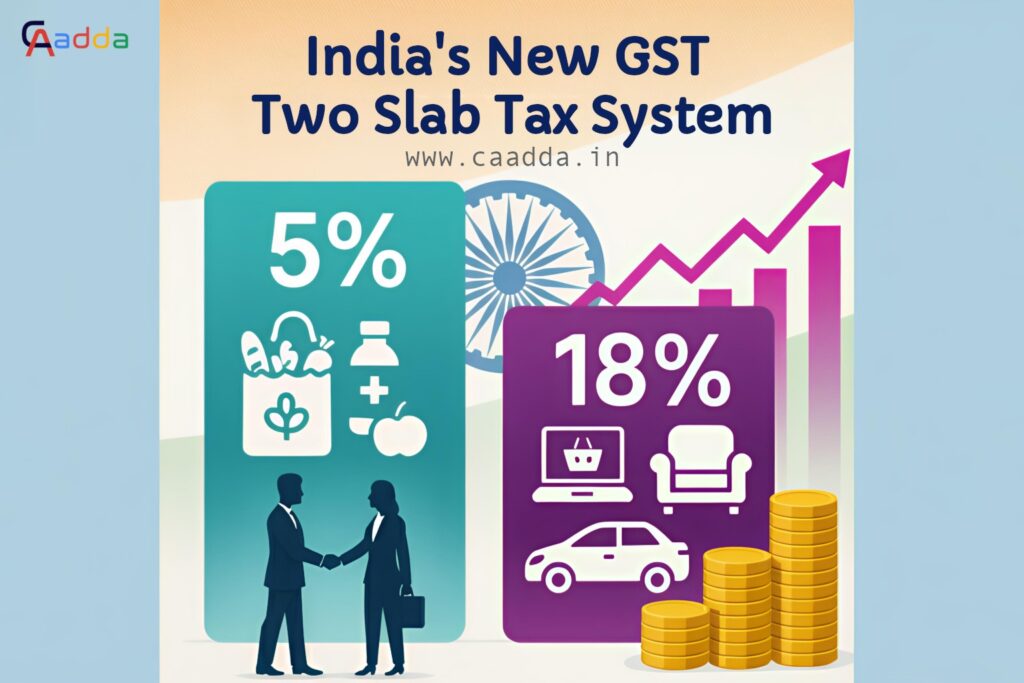
The Government of India has announced Next-Gen GST Reform, taking a landmark step towards a more user-friendly and consumer-friendly system of taxation. This new system, also referred to as the Two Slab Tax System, is a simplified version of the previous multi-slab tax system. It is expected to take the weight off the typical household, to give strength to small businesses, and to boost the economy.
Under these new GST rules, tax rates on necessities, medicine, education, and even vehicles have been rationalised, making them more affordable in many industries. This new direction has been incorporated into the government’s vision to create an Aatmanirbhar Bharat; consumers and industries alike will find it easier to comply and less expensive.
Why the New GST System?
Since the introduction of the Goods and Services Tax in India, the issue of multiple tax slabs has been a consistent concern. The previous system was not very clear to taxpayers, especially small businesses. The Two Slab Tax System has now simplified this structure, providing a sense of relief and making it easier to comply, thereby saving a significant amount of money.
This relief is evident in our daily lives, as groceries, educational materials, hospital bills, and vehicles become cheaper due to these new GST changes.
Major India GST System Highlights.
The following is the new GST rates list in major categories:
Everyday Essentials
Item | Before Reform | After Reform |
Hair oil, toothpaste, hair cream, shampoo | 18% | 5% |
Butter, ghee, cheese, dairy spreads | 12% | 5% |
Drinks and ready-made snacks | 12% | 5% |
Healthcare Relief
Item | Before Reform | After Reform |
Health and Life Insurance | 18% | Nil |
Thermometers, medical-grade oxygen, and test strips | 12% | 5% |
Corrective spectacles | 12% | 5% |
Education Made Affordable
Item | Before Reform | After Reform |
Maps, charts, globes, and stationery | 12% | Nil |
Exercise books, pencils, crayons | 12% | Nil |
Support for Farmers
Item | Before Reform | After Reform |
Tractors, parts, and farm equipment | 18% | 5% |
Drip irrigation systems and micronutrients | 12% | 5% |
Automobiles at Lower Costs
Item | Before Reform | After Reform |
Petrol & Diesel Hybrid Cars | 28% | 18% |
Motorcycles (350cc and below) | 28% | 18% |
Commercial transport vehicles | 28% | 18% |
Electronic Appliances – Household Boost.
Item | Before Reform | After Reform |
Air Conditioners, televisions, dishwashers, projectors | 28% | 18% |
Business Process Reforms
In addition to lowering tax slabs, the new GST rules make registration and refunds simpler:
- Registered automatically within three working days.
- Provisional Refunds Sanctioned by risk-based systems.
- The special treatment of SMEs includes cash relief.
That saves businesses time spent on compliance and more time on growth.
Why This Matters to You
The Two Slab GST System will help to ensure that:
- Basic goods are supplied at a lower price.
- Better margins are granted to farmers and SMEs.
- The costs of healthcare and education are reducing.
- Cars and gadgets become cheaper.
The reform brings happiness to the kitchen in the classroom, hospitals on the highways, and beyond.
Final Thoughts
The new GST updates are a significant step in the reforms of taxation in India. The government has not only been helping households by making essentials cheaper but is also stimulating economic growth by making slabs more straightforward. As a business owner, a student, a farmer, or a homemaker, the benefits of this tax reform will bring your bills down and make your life easier.
Taxation in India has been made better, easier, and fairer now, and the list of new GST rates is a confirmation that it really is a Diwali gift to every Indian family.
For more details, please visit the link below:
https://pib.gov.in/PressReleasePage.aspx?PRID=2163555